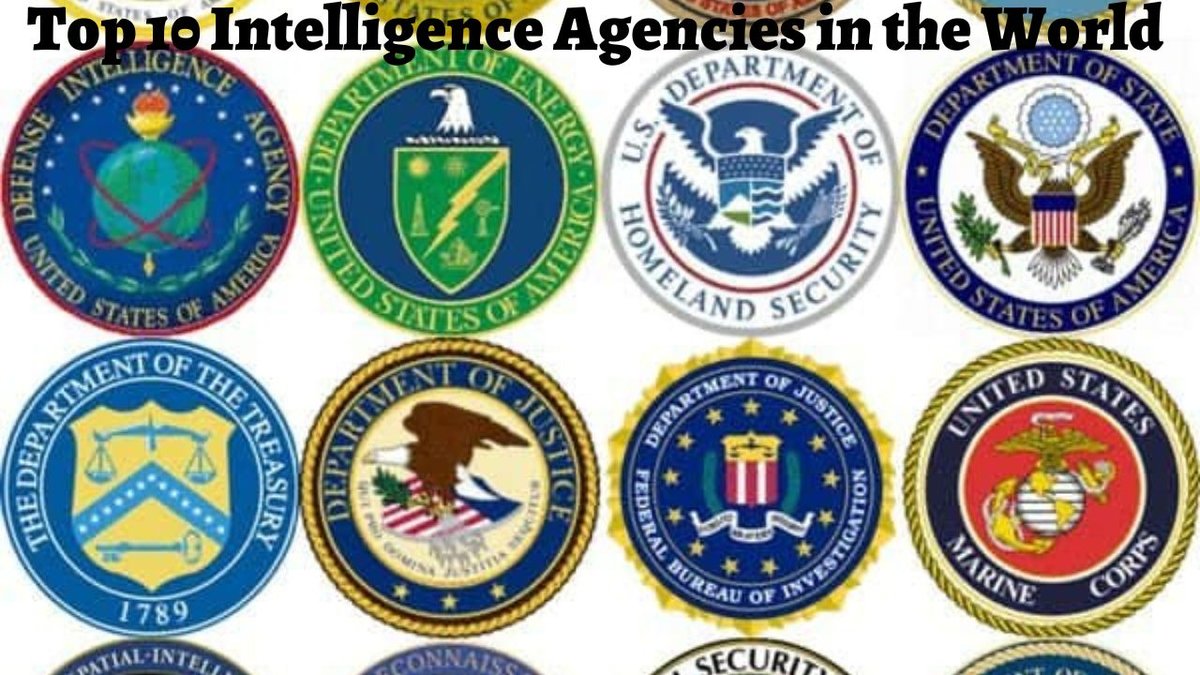
When you hear "Global Intelligence Agencies," your mind might conjure images of sophisticated spies, daring covert operations, and world-saving technology straight out of a blockbuster film. But the reality, while often less glamorous, is far more complex, impactful, and undeniably crucial to our everyday lives. These organizations are the unseen architects of national security, quietly working behind the scenes to gather, analyze, and disseminate information that shapes foreign policy, prevents attacks, and sometimes, even averts global crises.
Understanding these agencies isn't just for geopolitical enthusiasts; it's about grasping the forces that steer international relations, protect economic interests, and safeguard democracies in an increasingly interconnected and volatile world.
At a Glance: What You Need to Know About Global Intelligence Agencies
- More Than Spies: They are sophisticated information powerhouses, relying heavily on technology, data analysis, and open-source intelligence, not just cloak-and-dagger operations.
- Diverse Missions: From counter-terrorism and cyber defense to economic espionage and protecting critical infrastructure, their scope is vast and constantly evolving.
- A Global Network: Every nation has some form of intelligence apparatus, but a few prominent agencies exert significant global influence.
- Ethical Tightrope: They operate in a delicate balance between national security imperatives and upholding civil liberties, often facing intense public scrutiny.
- Adapting to Modern Threats: Today's challenges include cyber warfare, disinformation, climate change, and the resurgence of great power competition, demanding new approaches.
The Unseen Architects of Global Stability
Beneath the veneer of diplomatic pleasantries and public statements, a world of intelligence constantly churns. Global intelligence agencies aren't just government departments; they are the specialized organs nations rely on to understand the intentions, capabilities, and activities of foreign powers, non-state actors, and domestic threats. Think of them as the world's early warning system, its strategic navigators, and its quiet protectors, all rolled into one.
Their core purpose is to provide decision-makers—presidents, prime ministers, military commanders—with insights they couldn't acquire through traditional diplomatic channels or public media. This isn't about solving crimes (though they may assist law enforcement); it's about anticipating future events, understanding hidden vulnerabilities, and securing a nation's interests on the world stage. From ancient scouts reporting on enemy movements to modern satellite imagery analysts tracking missile launches, the fundamental need to know has remained constant, even as the methods have transformed dramatically.
Why Every Nation Needs Its Eyes and Ears
Imagine navigating a dense fog without a map or a compass. That's essentially what nations would face without robust intelligence capabilities. These agencies serve several critical functions:
- National Security: This is the bedrock. Identifying and neutralizing threats from terrorism, espionage, proliferation of weapons of mass destruction, and hostile state actors.
- Foreign Policy Guidance: Providing leaders with accurate assessments of other countries' political stability, economic health, and strategic intentions, allowing for informed diplomatic decisions.
- Economic Advantage: Gathering intelligence on global markets, technological advancements, and trade negotiations can protect a nation's economic interests and foster growth.
- Military Operations: Supplying crucial data about enemy positions, capabilities, and vulnerabilities, directly influencing tactical and strategic military planning.
- Cyber Defense: In the digital age, defending against state-sponsored hacking, intellectual property theft, and infrastructure attacks has become a primary mission.
Intelligence Spectrum: Different Flavors, Different Missions
Intelligence isn't a monolithic entity. It's collected and analyzed through various disciplines, each with its strengths and challenges. Understanding these "INTs" (as they're known in the trade) helps demystify how agencies piece together the global puzzle.
HUMINT: The Original Spycraft
Human Intelligence, or HUMINT, is what most people picture when they think of espionage: agents (spies) gathering information through personal contact, covert operations, and clandestine networks. It's about access to closed societies, understanding human motivations, and acquiring insights that technology simply can't provide.
- Pros: Can yield unique, highly nuanced, and predictive insights into intentions and motivations.
- Cons: High risk, ethically complex, time-consuming, and highly susceptible to deception.
SIGINT: Eavesdropping on the Digital World
Signals Intelligence (SIGINT) involves intercepting and analyzing electronic signals. This includes communications intelligence (COMINT) from phone calls, emails, and encrypted messages, and electronic intelligence (ELINT) from radars and weapon systems. Agencies like the NSA (National Security Agency) in the U.S. and GCHQ (Government Communications Headquarters) in the UK are masters of this domain.
- Pros: Can provide vast quantities of data quickly, often without direct human risk.
- Cons: Requires immense technical capability, faces constant encryption challenges, and raises significant privacy concerns.
IMINT: The Eyes in the Sky
Imagery Intelligence (IMINT) uses satellite, drone, and aerial photography to gather information. Think of it as persistent global surveillance, capturing everything from troop movements and missile silo construction to changes in industrial activity.
- Pros: Provides objective, verifiable evidence over wide areas, useful for verification and monitoring.
- Cons: Can be limited by weather, camouflaged targets, and interpretation challenges.
OSINT: The Power of Public Data
Open-Source Intelligence (OSINT) is perhaps the most rapidly growing and underestimated intelligence discipline. It's the collection and analysis of publicly available information: news articles, social media posts, academic papers, satellite images (like Google Maps), government reports, and even obscure blogs. With the internet, the sheer volume of OSINT available is staggering.
- Pros: Legal, ethical (generally), cost-effective, and offers enormous breadth of information.
- Cons: Requires sophisticated filtering and verification processes to separate fact from misinformation, and can be overwhelming in volume.
MASINT: Decoding the Technical Fingerprints
Measurement and Signature Intelligence (MASINT) involves the scientific and technical analysis of data to identify unique characteristics ("signatures") of targets. This could be analyzing the exhaust plume of a missile to determine its fuel type, detecting radar emissions to identify a specific aircraft, or even analyzing seismic activity. It's the highly specialized world of technical intelligence that provides specific, often granular, details.
- Pros: Provides definitive technical data, useful for verifying other intelligence sources.
- Cons: Extremely complex, requires specialized scientific and engineering expertise and equipment.
The World's Most Prominent Intelligence Players
While almost every country has intelligence services, some agencies have achieved global recognition due to their operational scope, historical impact, or sophisticated capabilities. These often fall into categories: those focused externally on foreign threats and those focused internally on domestic security.
- External Intelligence Agencies: These are the ones typically associated with international espionage. Examples include the CIA (U.S. Central Intelligence Agency), the MI6 (Secret Intelligence Service) of the United Kingdom, Mossad of Israel, and the SVR (Foreign Intelligence Service) of Russia. Their primary mission is to gather intelligence on foreign governments, organizations, and individuals.
- Internal Security Agencies: These focus on protecting national security within their own borders, often combating terrorism, espionage, and organized crime. Notable examples are the FBI (U.S. Federal Bureau of Investigation), the MI5 (Security Service) of the United Kingdom, and the FSB (Federal Security Service) of Russia.
While their mandates differ, there's often significant overlap and cooperation between external and internal agencies, especially in combating transnational threats like terrorism. To understand more about the multifaceted world of intelligence, you might want to explore the espion hub for deeper insights into spycraft and national security.
Evolving Threats: Why Agencies Can't Stand Still
The intelligence landscape is a dynamic one, constantly reshaped by geopolitical shifts, technological advancements, and new adversaries. Agencies must continually adapt, or risk becoming obsolete.
Cyber Warfare & Digital Espionage
This is arguably the most transformative threat of the 21st century. State-sponsored actors, sophisticated criminal groups, and even lone wolf hackers can now disrupt critical infrastructure, steal intellectual property, interfere with elections, and launch devastating attacks from anywhere in the world. Intelligence agencies are not only tasked with collecting intelligence in this domain but also with defending national networks and even engaging in offensive cyber operations.
Transnational Terrorism
Despite significant successes since 9/11, the threat of terrorism persists. Groups like ISIS and Al-Qaeda, along with their affiliates, continue to evolve, using online radicalization, decentralized networks, and adapting tactics. Intelligence agencies must track these diffuse threats, predict attacks, and counter ideological narratives across borders.
Great Power Competition
After decades focused on terrorism, intelligence priorities are shifting back towards traditional state-on-state rivalry. The rise of China, a resurgent Russia, and other regional powers means a renewed focus on military capabilities, technological supremacy, and geopolitical influence. This entails sophisticated counter-espionage, economic intelligence, and understanding complex strategic doctrines.
Climate Change & Resource Scarcity
Emerging as a silent but significant threat multiplier, climate change can destabilize regions, fuel migration, and spark resource conflicts. Intelligence agencies are increasingly tasked with assessing the security implications of these environmental shifts, from predicting food shortages that could lead to unrest to tracking how adversaries might exploit these vulnerabilities.
Disinformation & Hybrid Warfare
The deliberate spread of false information, often through social media, is a potent weapon in modern conflict. Adversaries use disinformation to sow discord, undermine trust in institutions, and influence public opinion. Agencies are grappling with how to identify, track, and counter these sophisticated influence operations without infringing on democratic freedoms. This "hybrid warfare" blends conventional military actions with cyberattacks, disinformation campaigns, and economic coercion, making attribution and response incredibly challenging.
Ethical Minefields and Oversight Challenges
Intelligence work, by its very nature, often occurs in the shadows. This secrecy is essential for effectiveness but creates inherent tensions with democratic principles of transparency and accountability. Navigating these ethical minefields is one of the most persistent challenges for global intelligence agencies.
Balancing Security with Civil Liberties
A core dilemma is how much surveillance is acceptable to prevent threats versus how much it infringes on the privacy and civil liberties of citizens. Mass data collection programs, for instance, have ignited fierce debates globally. Agencies constantly grapple with defining the line between legitimate intelligence gathering and overreach, a line that often shifts with public sentiment and legal frameworks.
The "Dirty Tricks" Perception vs. Necessary Covert Action
Intelligence agencies sometimes engage in covert actions—operations designed to influence foreign events without revealing the hand of the sponsoring government. While often necessary for national security objectives, these operations can be controversial, leading to accusations of "dirty tricks" or interference in sovereign affairs. Distinguishing between legitimate covert influence and unwarranted meddling is a constant debate.
Oversight Mechanisms: The Guardians of Accountability
To prevent abuse of power, most democratic nations have established robust oversight mechanisms for their intelligence agencies. These typically include:
- Parliamentary Committees: Legislators with security clearances review budgets, operations, and policies, holding agencies accountable to elected representatives.
- Judicial Review: Courts review legal frameworks, warrants for surveillance, and occasionally specific operations to ensure compliance with the law.
- Independent Review Bodies: Non-governmental experts or ombudsmen may investigate complaints or conduct broader policy reviews.
- Public Scrutiny & Media: While operating under secrecy, major intelligence failures or abuses often spark public outcry and media investigations, forcing agencies to adapt and improve.
The Whistleblower Dilemma
Individuals within intelligence agencies who expose classified information—whistleblowers—present a complex challenge. While some are hailed as heroes for revealing government misconduct, others are condemned for compromising national security. The debate around whistleblowers highlights the ongoing tension between government secrecy and public's right to know, forcing a re-evaluation of transparency within highly secretive organizations.
Behind the Headlines: How Intelligence Works (Practical Insights)
Forget the dramatic car chases; most intelligence work is about painstaking detail, analysis, and critical thinking. It follows a structured, albeit iterative, process known as the intelligence cycle.
The Intelligence Cycle: From Raw Data to Actionable Insight
- Planning & Direction: What information do decision-makers need? What are the key intelligence questions? This phase defines the scope and priorities.
- Collection: Gathering raw data through HUMINT, SIGINT, IMINT, OSINT, and MASINT. This is where the initial pieces of the puzzle are found.
- Processing & Exploitation: Transforming raw, often technical, data into a usable format. This might involve decrypting communications, translating foreign documents, or enhancing satellite imagery.
- Analysis & Production: The core intellectual work. Analysts piece together processed information, cross-reference sources, identify patterns, assess reliability, and draw conclusions. They write reports, briefings, and assessments.
- Dissemination: Delivering the finished intelligence to the appropriate decision-makers in a timely and understandable manner. This could be a top-secret briefing for the President or a detailed report for military commanders.
This cycle isn't linear; new information can send analysts back to collection, and a lack of clarity might require a re-direction of effort.
The Analyst's Role: Connecting the Dots
Intelligence analysts are the unsung heroes. They aren't spies; they are highly skilled critical thinkers, often with deep expertise in specific regions, languages, or technical fields. Their job is to sift through mountains of information, identify what's important, assess its credibility, and synthesize it into coherent, actionable insights.
- Forecasting: Trying to predict future events or intentions.
- Scenario Planning: Developing multiple potential outcomes based on current intelligence.
- Warning Intelligence: Alerting decision-makers to imminent threats.
Avoiding Bias: A Constant Struggle
Even the most objective analyst can fall prey to cognitive biases (e.g., confirmation bias, anchoring). Intelligence agencies employ various techniques to mitigate this:
- "Red Teaming": Assigning a team to argue against the prevailing assessment to challenge assumptions.
- "Devil's Advocate": One analyst specifically takes an opposing view.
- Structured Analytic Techniques: Using frameworks and methodologies to ensure comprehensive and impartial analysis.
Mini Case Snippet: The Power of Fusion
Imagine a developing nation secretly enriching uranium.
- IMINT shows a new, unusually robust building constructed in an isolated area.
- SIGINT intercepts cryptic communications between scientists, referencing "centrifuges" and "heavy water."
- HUMINT reports from a source indicate a foreign nation is providing technical assistance.
- OSINT reveals a surge in purchases of dual-use equipment from a front company.
No single piece of intelligence is conclusive, but when fused together by skilled analysts, a clear picture emerges, allowing decision-makers to intervene diplomatically or otherwise. This fusion is the essence of modern intelligence work.
Common Myths and Misconceptions Debunked
The world of intelligence is shrouded in secrecy, making it ripe for misinterpretations. Let's clear up a few common myths.
Myth: All Spies Are Like James Bond
Reality: The vast majority of intelligence personnel are not swashbuckling field agents. Most work involves meticulous data analysis, technical development, linguistic interpretation, report writing, and administrative support. While some do engage in daring covert operations, it's far from the daily routine for most. Danger is present, but it's often psychological (stress, ethical dilemmas) rather than physical combat.
Myth: Agencies Know Everything
Reality: Intelligence agencies constantly operate with "intelligence gaps." They don't have perfect information, and they often struggle with ambiguity, deception, and the sheer volume of data. Predicting human behavior or complex geopolitical shifts is incredibly difficult. Major intelligence failures, like missing certain attacks or misjudging capabilities, are stark reminders of these limitations.
Myth: They Operate Without Any Rules
Reality: In democratic countries, intelligence agencies operate under strict legal frameworks, parliamentary oversight, and often judicial review. Their powers are defined by law, and abuses can lead to severe consequences for individuals and the agency. While secrecy is paramount, it's not a license for unchecked operations. Of course, the application and enforcement of these rules can vary, and non-democratic regimes often lack meaningful oversight.
The Future of Intelligence: AI, Data, and Human Ingenuity
The intelligence world stands at the precipice of profound change, driven by technological leaps and an ever-increasing volume of information.
The Rise of AI and Machine Learning
Artificial Intelligence (AI) and machine learning (ML) are rapidly transforming intelligence. AI can process vast quantities of data (SIGINT, OSINT) far faster than humans, identifying patterns, translating languages, and even predicting behaviors. This frees up human analysts to focus on higher-level critical thinking and complex problem-solving. AI is invaluable for:
- Threat Detection: Quickly identifying anomalies in network traffic or satellite imagery.
- Data Fusion: Integrating disparate data sources into a coherent picture.
- Predictive Analytics: Forecasting potential hotspots or actor intentions.
Ethical AI and Autonomous Systems
The deployment of AI in intelligence raises significant ethical questions. Who is accountable when an AI makes a critical error? How do we prevent algorithmic bias from influencing analysis? The development of ethical guidelines for AI, particularly in areas like autonomous surveillance and decision-making, is a critical challenge.
The Enduring Value of Human Judgment
Despite the power of AI, human intelligence remains indispensable. AI can find patterns, but only a human can truly understand nuance, context, and intent. Human agents can build relationships, interpret cultural subtleties, and exercise moral judgment that machines cannot. The future of intelligence lies in a symbiotic relationship between advanced technology and sharp human intellect.
Collaboration Across Agencies and Nations
Transnational threats like cyber warfare and climate change necessitate unprecedented levels of international cooperation. Agencies are increasingly sharing intelligence, developing joint capabilities, and coordinating operations across borders. Building trust and secure communication channels between diverse intelligence communities is paramount for global security.
Staying Informed in a Complex World
The world of global intelligence agencies is intricate, often opaque, but undeniably vital. You might not be a spy or an analyst, but understanding their evolving roles, the challenges they face, and the ethical tightrope they walk empowers you as a citizen.
It encourages critical thinking about the information you consume, fosters an appreciation for the unseen efforts to maintain stability, and highlights the ongoing debate between security and liberty that defines modern democracies. Stay curious, question assumptions, and recognize that the quiet work of intelligence continues to shape our shared future, far beyond the silver screen.